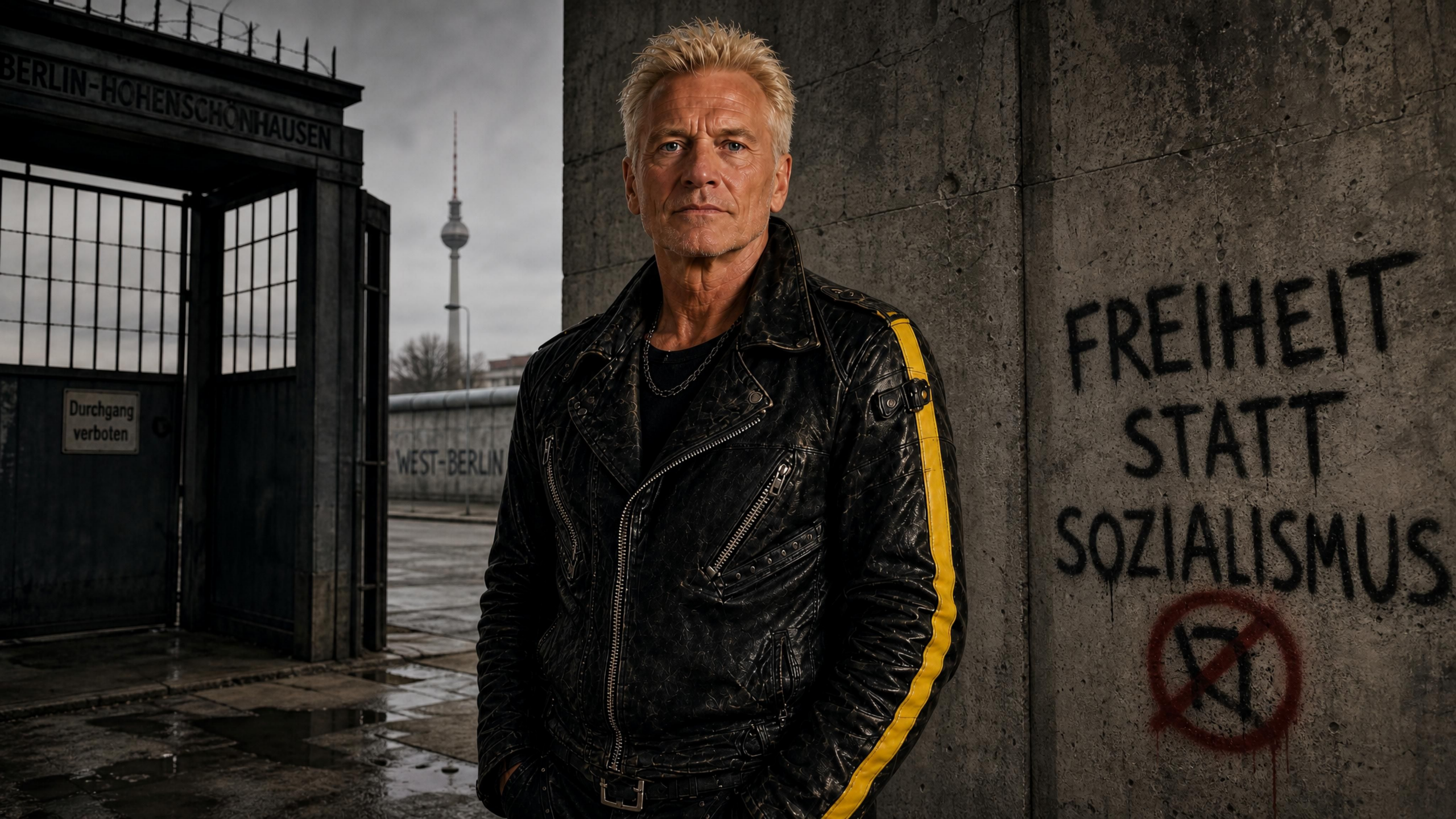



A personal political comment from the perspective of David Stern on Merkel’s language, East German citizenship, and the memory of political imprisonment
Ich bin nicht „später dazugekommen“
Angela Merkel can mean well and still be wrong. That is the problem here. The sentence sounds inclusive, almost generous: all German citizens belong to the people. On the constitutional level, that is true. But the way she linked East Germans and naturalized Syrians in one breath flattened two very different histories into one careless metaphor.
I am not a man who “came later” to the German people. I was already a German citizen when the SED state locked me up for fighting for freedom. I did not cross into Germany in 1985. I was pulled out of a German dictatorship into the free part of my own country.
Citizenship is not a single story
Merkel’s remark touched a legal truth and a historical nerve at the same time. Under the Basic Law, German state authority comes from the people. The Basic Law also defines who counts as German in law. A naturalized citizen becomes part of that political community through a lawful process. That is a democratic act, and no one should diminish it.
But a GDR citizen was not a latecomer to Germany. He or she was already part of the German legal community as the state understood it after 1949, and for many East Germans the question was never whether they belonged, but under what kind of regime they were forced to live. That difference matters. It is the difference between becoming a citizen and surviving a state that had turned its own citizens into objects of power.
From prison to freedom
My own path was not immigration. It was repression, imprisonment, and release by political barter. In 1984 I was arrested in the GDR for unauthorized contact with Western media. I spent thirteen months in prison. In 1985 the Federal Republic bought me out as part of the Häftlingsfreikauf. After that came forced expatriation from the GDR and several interrogations by the Allies.
That sequence is not a footnote. It is the point. The Federal Republic did not “receive” me as a newcomer from abroad. It recovered a German man from the hands of a German dictatorship. The state that held me had first punished me, then priced me, then let me go.
The scale of the bargain
The Häftlingsfreikauf was not a marginal exception. Between 1963 and 1989, the Federal Republic bought 33,755 political prisoners out of DDR prisons. The largest number came in 1985, when 2,669 people were freed in a single year. This was a system of secret political relief, negotiated through churches, lawyers, and state channels, and paid for in hard currency, goods, and silence.
That is why Merkel’s phrasing stings. Not because she spoke about Syrians. Not because she recognized naturalized citizens as fully belonging. The wound lies elsewhere: an East German former chancellor used a sentence that makes former prisoners of the GDR sound like people who arrived late to Germany, as if we had come from somewhere else and only afterward earned the right to belong.
What the sentence erases
It erases detention. It erases the prison gate. It erases the fact that the Western half of Germany did not treat us as immigrants, but as fellow Germans rescued from a German state that had criminalized dissent. It erases the humiliation of being inspected after release, as though freedom itself required an additional examination.
That is why I reject the sentence so sharply. Not because it is hateful, but because it is historically lazy. A fair, inclusive intention does not excuse a false equivalence. East Germans were not late arrivals to the German people. We were people of the same country, split by a dictatorship that tried to control our biographies, our speech, and our exit.
So no, Frau Merkel: I was not “later added.” I was already there when the state put me in chains. In 1985 the Federal Republic did not make me German. It got a German back.
Autor
David Stern
Redaktionelle Recherche
DELTA-9 Ai LAB
Research • Context • Sources
für ROADSTONES MEDIA
Quellen
- www.welt.de
- www.bundesregierung.de
- www.bpb.de
- zzf-potsdam.de
- www.bundesstiftung-aufarbeitung.de
- ostdeutsche-zeitung.de
- www.bundesarchiv.de
- www.bundesstiftung-aufarbeitung.de
- www.bundesarchiv.de
- www.bpb.de
- www.geschichte-doku.de
- www.geschichte-doku.de
- rewis.io
- www.bpb.de
- www.ruhr-uni-bochum.de
- www.weltderfertigung.de
- de.wikipedia.org
- dserver.bundestag.de
- www.gesetze-im-internet.de
- www.gesetze-im-internet.de
- www.gesetze-im-internet.de
- www.gesetze-im-internet.de
- www.gesetze-im-internet.de
- www.bundesverfassungsgericht.de
- www.bundesverfassungsgericht.de
- www.gesetze-im-internet.de
- www.gesetze-im-internet.de
- www.gesetze-im-internet.de
- www.gesetze-im-internet.de
- www.gesetze-im-internet.de
- www.gesetze-im-internet.de
- www.bundesverfassungsgericht.de
- www.bundesverfassungsgericht.de
- www.bundesarchiv.de
- www.bundesarchiv.de
- www.bundesarchiv.de
- www.bundesarchiv.de
- www.bundesarchiv.de
- www.bundesarchiv.de
- www.bundesarchiv.de
- www.bundesarchiv.de
- www.bundesarchiv.de
- www.bundesarchiv.de
- www.bundesarchiv.de
- www.bundesstiftung-aufarbeitung.de
- www.bundesarchiv.de
- www.bundesarchiv.de
✓ Verified by DELTA-9 Ai LAB