

MEDIA CENTRE
THE WHOLE STORY
THE STERN ADDRESS // FULL EPISODE 2
THE SOUNDTRACK
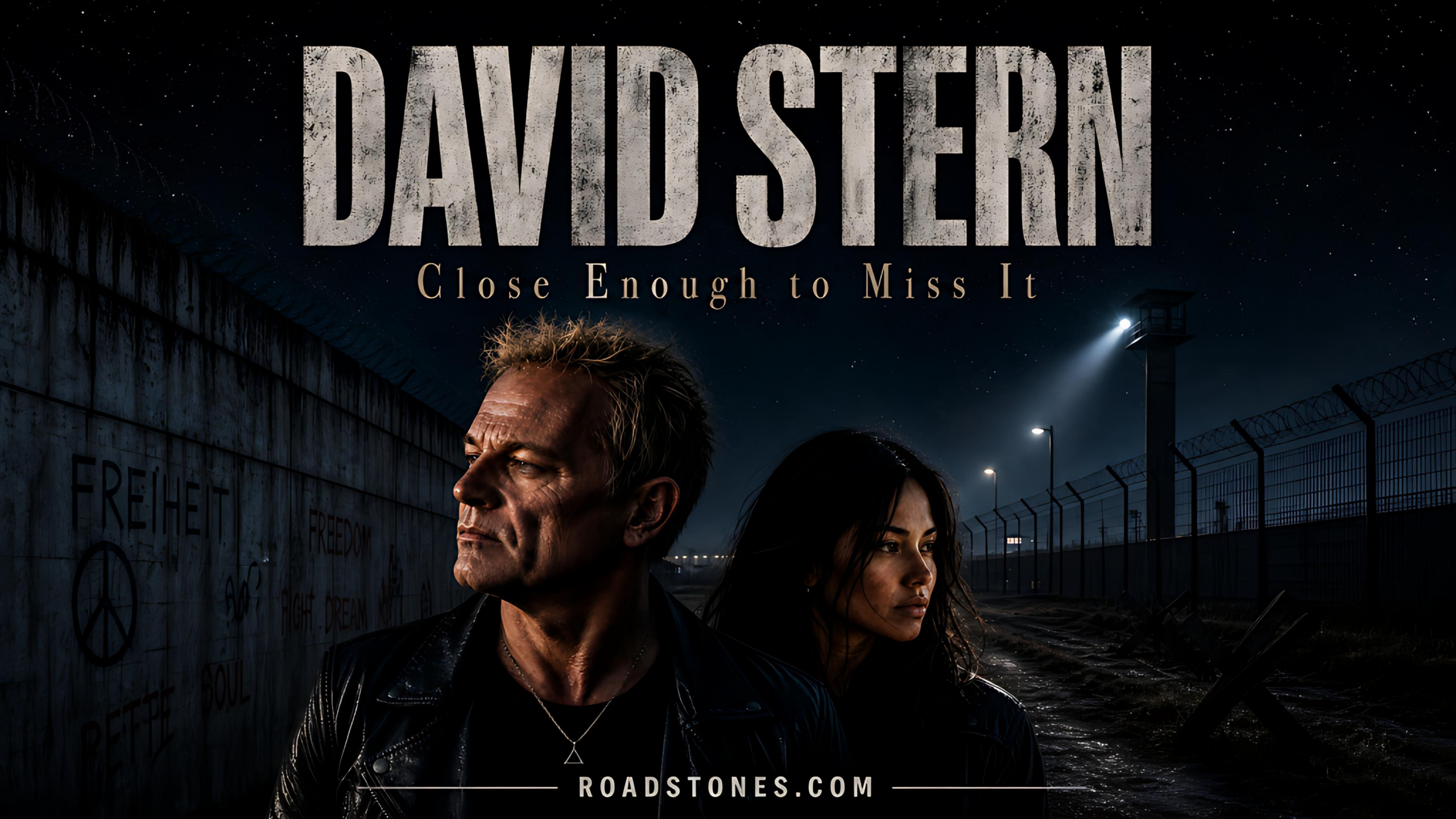
CLOSE ENOUGH TO MISS IT // LISTEN ON SPOTIFY
WHAT CAME BEFORE
The night won’t settle down. A TV is flickering, old footage drifting out of another decade, and with it comes the city again, so close it feels like it’s just around the corner. Down by the kiosk there’s the smell of cold smoke, cola, chocolate, and that tired, worn-out Berlin that never quite leaves the room. Outside, memory rides along the bridges, down by the river, through tunnels made of concrete and history. Back then, you didn’t just see streets and buildings; you moved through a state that watched every step and still seemed to be cracking at the edges. In this night, sarcasm and longing, irritation and recognition all run together.
WHEN THE CAMERA GOT THERE LATE
Now I can’t sleep. I’ve turned on the TV, the old one, because the new one is still packed up, standing upright against the wall like it’s waiting for permission. Something from Radio Bremen is on, from the eighties. A camera crew rode the U1 through Berlin, and now they’re showing the part they figured was the fancy bit.
Schlesisches Tor. Kreuzberg 36. Even the walk down the stairs used to feel like stepping into a different climate. To the right was Gröbenufer, and beyond it the Spree. The river of death, they called it in those days, and on the other side the bank looked like a rejected thought: no man’s land, another wall, another strip of control, another state pretending it couldn’t be moved. Mühlenstraße. Warschauer Straße. East Berlin. Just a few more steps and you were into another reality. Houses, facades, streets where history didn’t need explaining because it was in the brickwork.
Karl-Marx-Allee. Some folks still called it Stalinallee, like an old name could hold on to an old hardness. Stalin was dead, and with him the name, as if even the boulevard had understood that power doesn’t just vanish — it gets renamed. Radio Bremen already knew that, sure enough. But the camera still stopped short in front of its own wonder, like world history was some strange fairground you could visit for a minute and then leave behind.
THE BUBBLE BEFORE THE WORD
They interview whoever passes by at night. Turks. Germans with slicked-back hair, in a kiosk with an apron on. Cola, 1.50. A large one. Punks. They were pretty much always there, just not so visible in daylight, because tiredness can hide people too. That kind of Berlin night didn’t care much about its own importance.
Even now, I can’t say I think much of Radio Bremen. Back then, it felt to me like some over-subsidized public-access show, dollhouse journalism with its own topics in its own tiny world. Nobody said bubble yet. Back then it sounded more like chewing gum. They were frighteningly close to world history, and still so far from it that it almost turned funny. A few running meters of unexposed history: that’s what “close enough” looks like when you’re standing right beside it and still miss it.
They stumbled through Kreuzberg like tourists from the Westerwald who’d collectively wandered into the Cit Cat Club, and later ended up on worn-out chairs outside the Paris Bar with Harald Juhnke, who’d explain his frontier city to them as if Berlin could only be endured drunk. Juhnke himself, that self-declared Sinatra of Berlin, was no less provincial for all the swagger — maybe even more so. Just one more drink, maybe. That was part of the place too: the big talk and the small exhaustion underneath it.
THE MAN BEHIND THE COUNTER
The guy in the apron wipes the elbow rest for the umpteenth time. As if repetition alone could make something clean. Maybe not. Maybe you need fresh water now and then. He takes another drag from his cigarette. I’m afraid he’s about to burn his fingers. Then he looks, almost absent-minded, at the bolted-down night trash bin, which seems ready to implode from nausea, like the Vesuvius of Schlesien.
“Yeah,” he says at last, “sometimes these little girls come in here to buy a bar of chocolate — fourteen, fifteen, sixteen years old — or a cola or condoms, so they can make a little extra money after school.”
He gives the faintest smile.
TOO CLOSE TO FEEL EXOTIC
The scene in this piece sits roughly in 1985/1986, right when I got spit out of the GDR after political imprisonment and landed in West Berlin, in Kreuzberg. By then, the moped license was already older, and the moped itself was long gone. But the head keeps riding when the body has already been dropped somewhere else.
Suddenly, my mockery of the tourist camera gets a biographical counterweight. They come to Kreuzberg looking for something exotic to film. I come to Kreuzberg because the GDR just spit me out of its prison. And just a few meters away lies the state I’ve only just left. That’s where the real tension starts: not in the camera that thinks everything is scenery, but in the gaze that knows how close escape and origin, chance and history really are.
The folks in their bubble don’t care what lies a few meters away. They don’t care about me either.
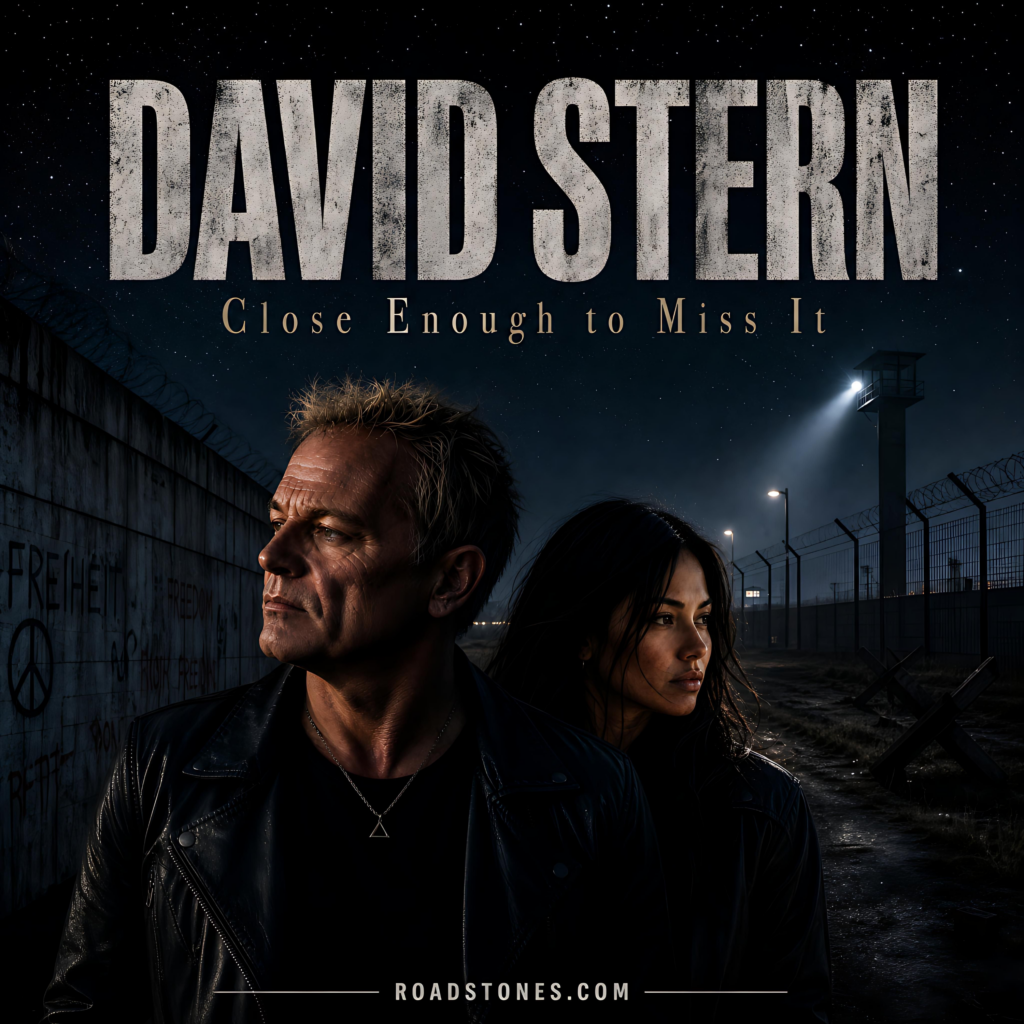
Close Enough to Miss It
[VERSE 1]
The TV glows in the corner,
old smoke in the air
New set still boxed up,
like it don’t want to be there
Radio Bremen rolling,
black-and-white ghosts in the frame
And the night keeps on talking,
but it don’t say my name
[VERSE 2]
Schlesisches Tor in the dark, and the river looks cold
On one side a wall, on the other side a story untold
Mühlenstraße, Warsaw wind, East Berlin breathing slow
Just a few steps farther and the whole world starts to show
[PRE-CHORUS]
They came for the spectacle, for the grit and the flare
But history was standing right there
[VERSE 3]
Kreuzberg nights and cheap cola, a kiosk light still bright
Punks in the shadows, moving through the edge of night
The man in the apron wipes that counter one more time
Like clean could be a prayer and a cigarette a sign
[CHORUS]
Close enough to miss it, that’s the way it goes
You can film the pavement and never know
What lives one step beyond the frame
What burns in the city without a name
[BRIDGE]
I came out of a prison with my heart still on the run
Leather jacket, moped days, young and half undone
They were chasing scenery, I was chasing air
And the state I had escaped was just standing there
[VERSE 4]
The old man smiles faint, the trash bin huffs and sighs
The night keeps its secrets in a thousand city eyes
A bubble full of noise, a little too proud to see
That the truth was always closer than it’s ever gonna be
[CHORUS]
Close enough to miss it, that’s the way it goes
You can film the pavement and never know
What lives one step beyond the frame
What burns in the city without a name
Written and Narrated by
David Stern
accompanied by
Tȟašúŋke WíiyA
Research & Verification
by VIRCAi
Verified Intelligence • Research • Context • Ai
