














How the Former Front-Line City Made the Successor to the SED Its Strongest Political Force
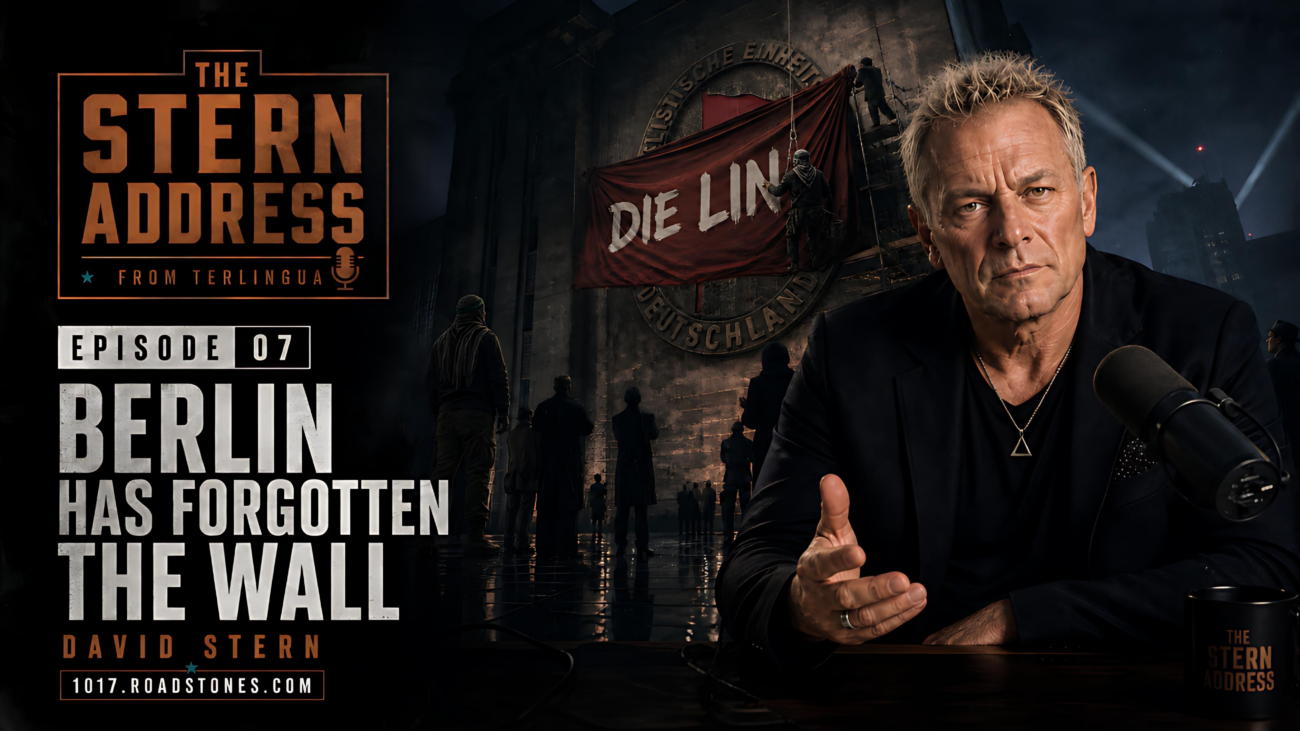
Berlin voted for the party in the old SED line. Not a rumor. Not a mood. A number. On September 20, 2026, Die Linke came first in the Berlin Abgeordnetenhaus election with 25.65 percent, and that is the kind of result that does not merely change a coalition table. It changes the memory disorder of a city.
I know what Berlin was supposed to have been. I also know what it cost to keep the other half of that city alive. In 1948 and 1949, the West did not defend West Berlin because the asphalt had some natural affection for freedom. It defended it because the Allied sectors had been drawn, then held, then supplied, then protected. The airlift was not poetry. It was logistics with history hanging from the wings.
What Berlin Was, and What It Chooses to Forget
Berlin was not born free. It was made free by lines on maps, by soldiers who stayed, and by pilots who kept landing when Moscow wanted the place to suffocate. That matters, because every later speech about Berlin’s special soul sounds better after the people who paid for that soul are dead.
And then I remember the other Berlin, the one that never got to pretend. I remember Arafat and Honecker rolling down Karl-Marx-Allee in an open Tschaika, with Arafat treated like a visiting head of state. That image still tells the truth faster than most modern speeches. The regime that jailed people for speech knew exactly how to dress power when it liked the guest.
The New Respectability of the Old Machine
Now look at Neukölln. On the election night, Linke celebrations there drew fire after Issa Remmo appeared at the party and Ibrahim Ibrahim was present in the same political setting, a figure publicly described in reporting as tied to pro-PFLP activism. The party later moved to distance itself from the appearance and from the outrage it had invited. Good. But the smell of political amnesia does not vanish because someone issues a correction after midnight.
This is not about proving a secret pact. Nobody needs a conspiracy theory when plain continuity is standing in the doorway. The question is harsher and simpler: who handed the SED a second life? The SED became SED-PDS, then PDS. The PDS later merged with the WASG to form Die Linke. The first free Volkskammer election in March 1990 did not erase the party’s past; it only gave Germany the first honest chance to deal with it. The first all-German Bundestag election was governed by a special transitional arrangement, because law itself understood that reunification was not business as usual. Politics knew. Memory did not always follow.
A Thought Experiment Berlin Should Hate
Imagine, for one second, that the Soviet administration had claimed all of Berlin in 1945. Schöneberg under Soviet rule. Wilmersdorf in the Soviet Zone. Reinickendorf without a French sector. No West Berlin. No island. No airlift, because there would have been nothing left to save from the air.
And Thuringia? Thuringia was already under American occupation Weimar had an American headquarters. Had the United States refused to withdraw behind the drawn lines, today’s history would look very different. Thuringians might speak for decades about Western democracy while Berliners explained, with a straight face, why they could do nothing about forty years of SED rule.
That is how thin the margin was. A pencil line. A diplomatic agreement. The departure of some soldiers and the entry of others.
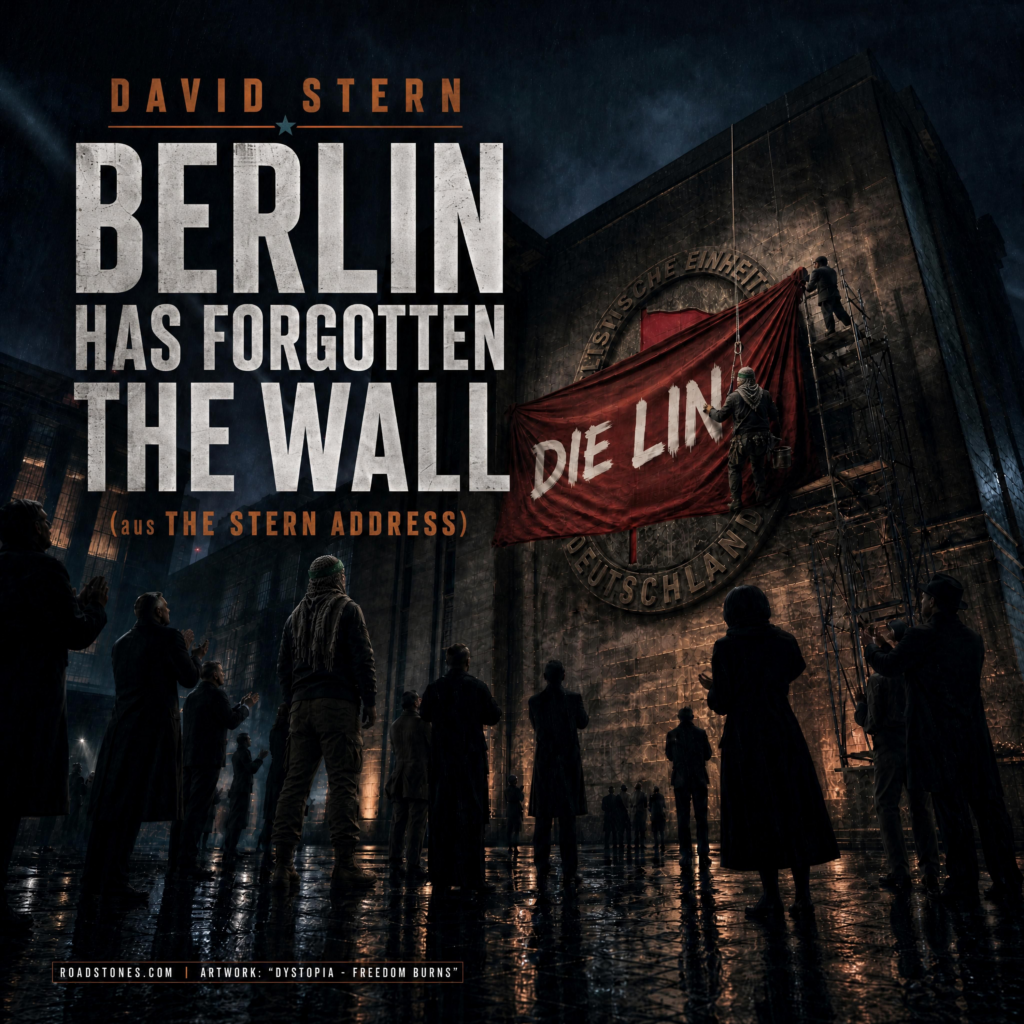
The West Berliner was not born free. He was lucky. American, British, and French power declared his streets part of their sphere, then defended that claim against blockade, threat, and blackmail.
We did not keep West Berlin alive so that its memory could die before its witnesses did.
And yet here we are. In a city that now behaves as if freedom were a local soil condition, as if it had always been lying there between the cobblestones and the currywurst stands. As if no aircraft had ever had to land for it, as if no one had ever gone to prison for it, as if no one had ever died at a wall trying to cross into it.
Maybe Cologne would have done no better. Maybe Munich either. No city is born with a freedom gene. Freedom exists only as long as people remember it can be lost.
Berlin had fewer excuses than any other German city. Berlin could see the Wall. Berlin knew the dead. Berlin heard the planes. And Berlin has forgotten.
That is not politics. That is a civic failure of memory, and memory is the one thing a front-line city is not allowed to misplace.
Autor
David Stern
Redaktionelle Recherche
DELTA-9 Ai LAB
Research • Context • Sources
für ROADSTONES MEDIA
